RecyclerDaily
Latest
Environmental groups push for strengthened leachate rules in New York
HomeLegislation & PolicyEnvironmental groups push for strengthened leachate rules in New York
Legislation & Policy·RecyclerDaily Staff··2 min read

Environmental groups push for strengthened leachate rules in New York

New York environmental groups demand stricter landfill leachate regulations, impacting waste management and recycling operations statewide.

New York environmental groups are demanding the state’s Department of Environmental Conservation (DEC) implement stronger regulations for landfill leachate, citing widespread contamination risks. This push directly challenges current waste management practices and could impose significant new compliance burdens on landfill operators and waste haulers statewide.
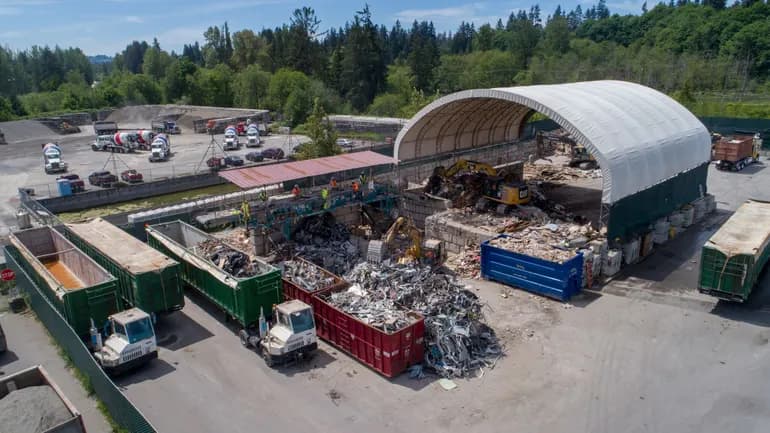
Environmental Groups Demand Stronger Leachate Controls

The current regulatory framework for leachate management in New York has faced increasing scrutiny. Environmental advocates argue that existing rules are inadequate to prevent the discharge of toxic “forever chemicals” (PFAS) and other pollutants into surface and groundwater. They contend that the DEC's current permitting system, which often allows landfills to discharge treated leachate into municipal wastewater treatment plants, merely shifts the pollution problem rather than solving it. * Environmental advocates from Riverkeeper, PEER (Public Employees for Environmental Responsibility), and Citizens for a Clean Wawayanda are spearheading the effort. * They highlight that leachate can contain over 300 distinct pollutants, including heavy metals, pharmaceuticals, and PFAS compounds. * The groups specifically target the DEC's general permits for solid waste management facilities, arguing they lack specific limits for emerging contaminants. * Current practices often involve trucking leachate hundreds of miles to wastewater treatment plants, which are not equipped to remove persistent organic pollutants like PFAS. * A recent study cited by Riverkeeper found that 96% of tested leachate samples from New York landfills contained detectable levels of PFAS.

Tightening Compliance Timelines for Waste Management

The DEC faces mounting pressure to update its regulations, potentially leading to tighter discharge limits and advanced treatment requirements for leachate. This shift would directly impact landfill operational costs and infrastructure investments. Operators could face mandates for on-site advanced oxidation processes, membrane filtration, or other specialized technologies to remove contaminants before discharge. Failure to comply would result in significant penalties and operational restrictions, pushing some facilities to re-evaluate their long-term viability.

What This Means for Recyclers

Recycling and waste-to-energy facilities could see increased demand as landfills face stricter, more costly leachate management rules. As landfilling becomes more expensive and challenging, municipalities and commercial generators will likely seek alternative waste diversion strategies. This could accelerate investment in advanced recycling technologies, composting facilities, and anaerobic digestion. ITAD operators may also see an indirect benefit as overall waste reduction becomes a greater priority, potentially leading to increased emphasis on electronics reuse and material recovery to minimize landfill reliance. Operators should monitor DEC's response and prepare for potential shifts in waste flow and disposal costs.
ShareLinkedInXFacebook