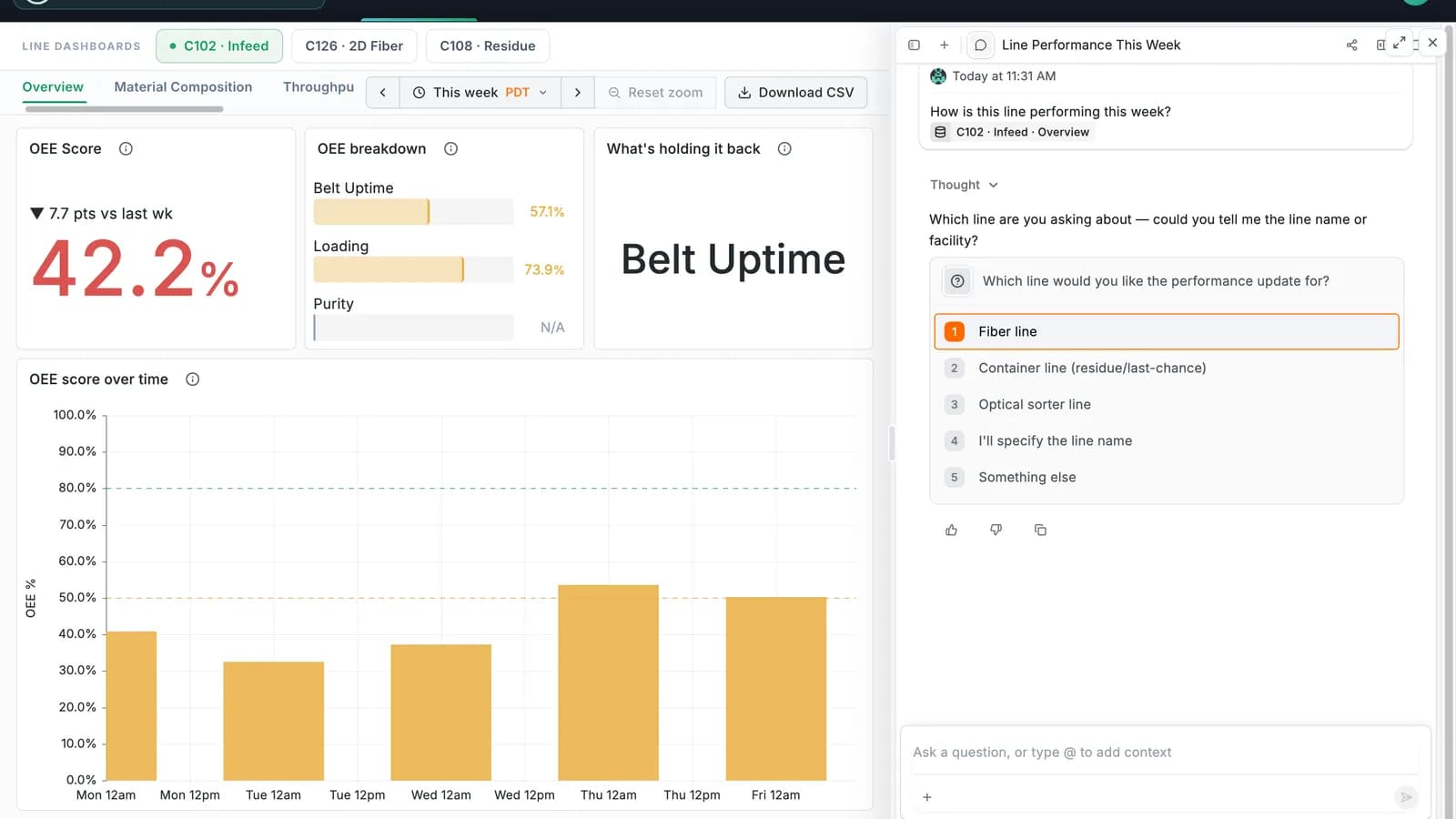
EverestLabs launched an AI agent for MRF robotics, enhancing sorting accuracy and operational efficiency across material recovery facilities.
EverestLabs introduced an Artificial Intelligence (AI) agent designed to enhance the capabilities of its robotic sorting systems in Material Recovery Facilities (MRFs), aiming to boost recovery rates and operational efficiency.
This new AI layer integrates directly with existing EverestLabs robotics, offering MRF operators a real-time, data-driven approach to material identification and separation, which directly impacts commodity values and landfill diversion metrics.
EverestLabs AI Elevates MRF Sorting Precision
The AI agent, developed over 18 months, leverages deep learning models trained on millions of images of recyclable materials, enabling robots to identify and sort complex waste streams with greater accuracy than previous vision systems.
- The AI agent currently processes 200,000 data points per hour from each robot.
- Initial deployments show a 15% increase in capture rates for targeted commodities.
- EverestLabs projects a 30% reduction in false positives for difficult-to-sort materials like film plastics and flexible packaging.
- The system is compatible with EverestLabs' existing fleet of over 100 robots deployed across North America.
- The AI agent provides predictive maintenance alerts for robotic components, extending operational uptime by an estimated 25%.
Operational Impact on Material Recovery and Quality
Integrating this AI agent means MRFs can now achieve higher purity levels for sorted commodities, reducing contamination penalties from end markets. Operators gain the ability to adapt sorting strategies dynamically based on incoming material composition, a significant advantage given the variability in residential and commercial waste streams. This technological advancement allows MRFs to recover more valuable materials that previously ended up in landfills due to misidentification or manual sorting limitations, directly improving their bottom line and meeting increasingly stringent quality specifications from buyers.
Data-Driven Insights for Strategic Planning
Beyond immediate sorting improvements, the AI agent provides granular data on material flow, composition, and anomalies within the waste stream. This intelligence allows MRF managers to identify trends, optimize equipment utilization, and make informed decisions about future investments in sorting technology. The system generates daily reports detailing material capture rates, contamination levels, and robot performance, offering transparency and accountability. This data can also inform discussions with municipalities and waste generators regarding source separation improvements, creating a feedback loop that benefits the entire recycling value chain.
What This Means for Recyclers
MRF operators must evaluate how advanced AI integration can optimize their existing infrastructure and workforce. The shift towards higher automation and data intelligence demands a re-evaluation of current operational models, potentially necessitating upskilling staff in data analysis and robotic maintenance. Recyclers should monitor the long-term performance data from early adopters to assess the return on investment and competitive advantages offered by such AI-driven sorting solutions.