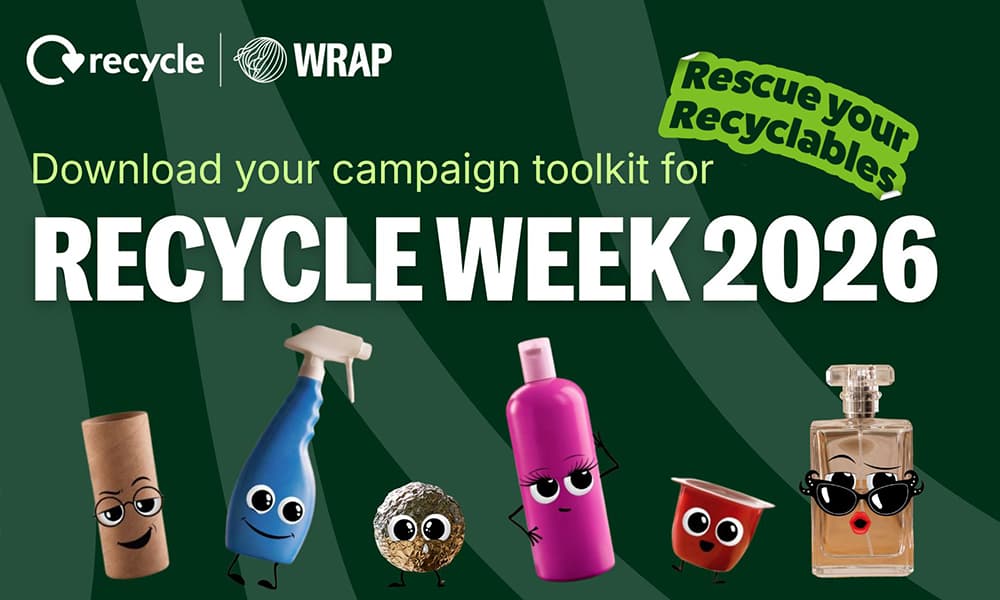
Recycle Week 2026 toolkit release by WRAP aims to standardize public messaging and drive increased material capture rates.
WRAP’s citizen campaign, Recycle Now, has released its Recycle Week 2026 Toolkit, providing local authorities and waste management companies with standardized messaging and assets for the upcoming September 2026 public awareness initiative.
This toolkit offers a unified approach to public recycling education, aiming to boost household participation and improve material quality, which directly impacts processing efficiency and commodity values for recyclers and material recovery facilities (MRFs) across the UK. Operators face significant challenges from inconsistent public understanding of recycling guidelines, leading to contamination and reduced yields.
Standardizing Public Recycling Messaging for 2026
The 2026 Recycle Week Toolkit, developed by WRAP (Waste and Resources Action Programme), provides a comprehensive suite of digital and print resources designed to simplify recycling instructions for the public. The initiative seeks to mitigate confusion arising from varied local collection schemes and inconsistent labeling, which often results in incorrect material segregation at the household level. This standardization is crucial for MRFs that process diverse material streams from multiple municipalities.
- The toolkit includes digital banners, social media assets, press release templates, and educational videos.
- It focuses on key material streams: plastics, paper, glass, and metals, emphasizing common contaminants.
- WRAP anticipates over 300 local authorities and waste contractors will utilize the toolkit.
- The campaign runs from September 23-29, 2026, with preparatory materials available immediately.
- A primary goal is to increase the capture rate of targeted recyclable materials by at least 5% in participating areas.
Operational Implications for UK MRFs and Collectors
The standardized messaging from WRAP's toolkit directly addresses one of the most persistent operational headaches for UK MRFs: inbound material contamination. Clearer public guidance on acceptable items and proper preparation (e.g., rinsing containers, flattening cardboard) should reduce the percentage of non-recyclable materials entering sorting lines. This translates to lower disposal costs for contaminants, less wear and tear on sorting equipment, and improved quality of baled commodities. Collection contractors could see a marginal increase in collection efficiency as householders become more adept at sorting, potentially reducing rejected bins and associated re-collection efforts. However, the success hinges on widespread adoption and consistent application of the toolkit by every local authority and private collector.
What This Means for Recyclers
Recyclers should monitor the impact of this campaign closely. An effective Recycle Week could yield cleaner material streams, potentially increasing the value of baled commodities and reducing processing costs associated with contamination. Engage with local authorities and waste management partners to ensure the toolkit's messages are being implemented effectively in your catchment areas. This initiative presents an opportunity to advocate for greater consistency in collection schemes, reinforcing the economic benefits of high-quality feedstock.