Kent County Partners with AMP to Recover Recyclables from Municipal Waste, Reduce Landfill Reliance
Kent County DPW partners with AMP, deploying an AI-powered sorting system to extract recyclables from municipal waste streams.
Kent County, Michigan, will implement an AMP ONE® municipal solid waste processing system to recover recyclables from mixed waste, diverting materials before they reach the county’s waste-to-energy facility. This initiative directly addresses the growing pressure on landfill capacity and the imperative to maximize resource recovery from the municipal solid waste stream.
This strategic investment by the Kent County Department of Public Works (DPW) signals a significant shift in how municipalities approach waste management, emphasizing advanced sorting technologies to capture value from historically landfilled or incinerated materials. The partnership affects regional waste haulers, material recovery facilities (MRFs), and local recycling programs.
Kent County Targets 100% Waste Diversion with AI Sorting
Kent County DPW aims for 100% waste diversion from landfills by 2030, a goal underscored by its Sustainable Business Park project, which integrates various waste processing technologies. The AMP ONE® system contributes a critical front-end solution, designed to extract high-value commodities from commingled residential and commercial waste streams. This pre-processing step enhances the efficiency of subsequent waste-to-energy operations by removing non-combustible materials and recovering marketable resources.
* Kent County DPW manages approximately 270,000 tons of municipal solid waste annually.
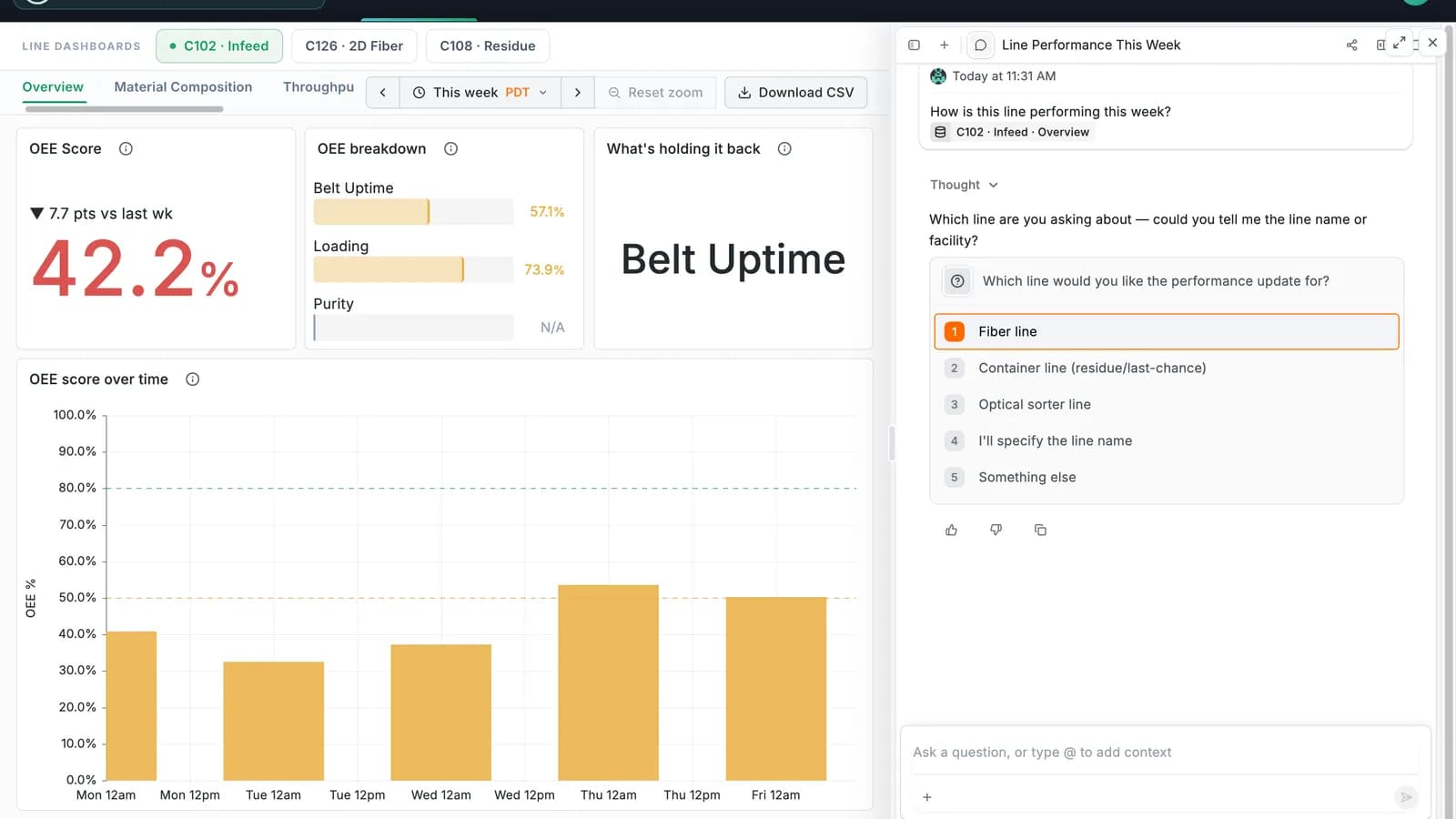
* The AMP ONE® system uses AI-powered robotics to identify and sort various material types, including plastics, metals, and fiber.
* The deployment supports Kent County's broader "Resource Recovery Plan," which prioritizes reducing reliance on traditional disposal methods.
* AMP’s technology has demonstrated recovery rates exceeding 60% for targeted commodities in similar mixed waste applications.
* Installation and commissioning are expected to be complete by Q4 2024.
Operational Shifts for Regional Waste Processors
The introduction of AI-driven sorting at the front end of Kent County’s waste stream will necessitate operational adjustments for regional waste processors and MRFs. Materials previously considered unrecoverable from mixed waste will now enter the commodity market. This creates new supply channels for recovered plastics, metals, and paper, potentially impacting pricing and availability for traditional MRF outputs. Facilities that can integrate these new streams or adapt to higher-quality incoming materials will gain a competitive advantage.
What This Means for Recyclers
Recyclers should prepare for an increased supply of post-consumer commodities originating from mixed waste streams, potentially altering market dynamics for specific grades of plastics and metals. This development validates the role of advanced AI and robotics in expanding the recoverable material pool, pushing the boundaries of what is economically recyclable. Operators should monitor the quality and consistency of these new streams and assess their capacity to process materials recovered from mixed waste, which may differ from traditional curbside collection inputs. The success of Kent County’s deployment could also spur similar investments in other municipalities, indicating a broader trend towards AI-enhanced mixed waste processing.